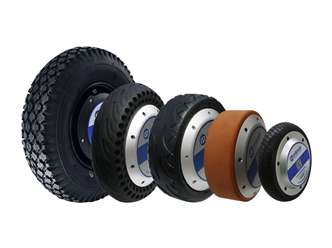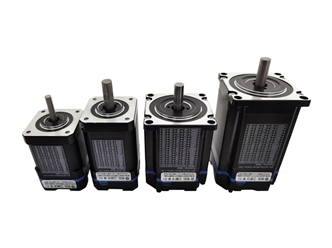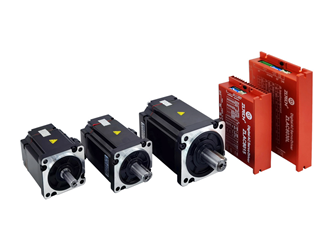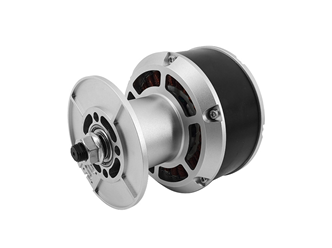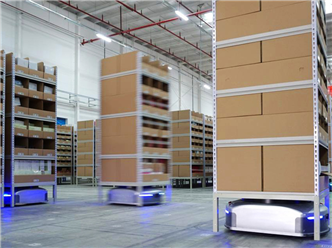

"Mr. Wang, your batch of AGV prototypes has slipped down the slope again." The project manager's helpless voice came from the other end of the phone. This was the third time this month—the motor lost power when parking on a slope, and the entire machine slowly slid down, almost crashing into the shelving. Fortunately, no one was passing by at the time, otherwise the consequences would have been unimaginable. Disassembling and inspecting the machine, the problem pointed to a detail that many people overlooked: the hub motor was not equipped with a holding brake.
This scenario is common in the mobile robotics, electric vehicle, and automation equipment industries. Many engineers, when first encountering hub motor selection, struggle with the same question: with or without a holding brake?
What is a brake lever? Let me explain in one sentence.
A clutch brake, also known as a power-off electromagnetic brake, is essentially a mechanical safety device that uses a spring to apply pressure and an electromagnetic release mechanism. Its working principle can be summarized in four words: "release when energized, lock when de-energized." When the motor is powered on, the electromagnetic coil generates magnetic force, which overcomes the spring force and pulls the friction plates away, allowing the motor shaft to rotate freely. Once the power is cut off or there is an emergency stop, the electromagnetic force disappears instantly, and the spring pushes the friction plates to press against the brake disc, locking the shaft within 0.1 seconds. The core value of this design lies in fail-safe operation—even if the power supply is unexpectedly interrupted, the controller malfunctions, or the cable comes loose, the clutch brake can automatically stop the equipment, preventing it from sliding or falling. It is not an optional extra, but a safety net in critical moments.
The "right and wrong" of the two options
Hub motors without brakes are compact, low-cost, and lightweight, making them perfectly adequate for horizontal operation scenarios. For example, in delivery robots on flat ground or indoor AGVs, the rotor's own positioning torque is sufficient to keep the load in place after a power outage and the absence of external driving force. Adding a brake to these applications would be an overkill, unnecessarily increasing costs and installation space.
However, in situations involving slopes, vertical lifting, or precise positioning, the lack of a brake becomes a safety hazard. Take an AGV weighing 200kg and with a load capacity of 100kg as an example. Parking on a 10-degree slope, the torque generated by the gravity component along the slope alone can reach tens of Newton-meters, far exceeding the motor's own positioning torque. Without a brake, the equipment would slowly slide down like a car with a failed handbrake. While hub motors with brakes increase axial length and cost several hundred yuan more, they provide triple protection:
1. Power failure self-locking: It can lock immediately in the event of any unexpected power failure, eliminating the risk of slope slippage.
2. Anti-slip: The static holding torque can reach tens of Newton-meters, making the vehicle as stable as a mountain when parked on a slope.
3. Precise positioning: After the machine stops, the rotor is mechanically locked and will not be displaced due to inertia or elastic rebound. In scenarios such as heavy-duty AGV ramp parking, lifting platform lifting mechanism, outdoor inspection vehicle, and automated parking system transporter, the brake is not an "optional" but a "standard" feature.
Three common misconceptions in product selection
Myth 1: Using the brake as a service brake. This is the most common mistake. The brake is designed for static parking, not dynamic braking. Frequently cutting off the brake power during movement to stop suddenly will cause the friction pads to generate a lot of heat during high-speed relative sliding, which will accelerate wear and reduce the lifespan from tens of thousands of cycles to a few hundred cycles. The correct procedure is to first use the motor brake (regenerative braking or energy consumption braking) to slow down to near a stop during normal parking, and then cut off the brake power to complete the locking. The brake should only be used for dynamic braking in emergency situations.
Myth 2: Focusing only on power and ignoring torque. When selecting a brake, the static holding torque must be greater than the torque generated by the load, and a safety factor (usually 1.5 to 2 times) must be allowed. If you only look at the motor power, it is easy to choose too small a motor. For example, a 300kg AGV on a 15-degree slope needs a holding torque of more than 1.5 times the wheel end torque. If the brake torque is insufficient, it will still roll down the slope.
Myth 3: Ignoring installation space and response timing. Motors with brakes have a longer axial length than ordinary motors of the same specifications, so space must be reserved during the design phase. A more hidden problem is response delay—both brake release and engagement have millisecond-level delays. If the controller responds too quickly, it may result in brief dragging (the motor is dragged by the brake before it starts turning) or slippage (the motor stops but the brake is not locked). During integration, it is essential to confirm the brake action sequence, minimum release voltage, and mechanical clearance adjustment specifications with the supplier.
A table to help you make decisions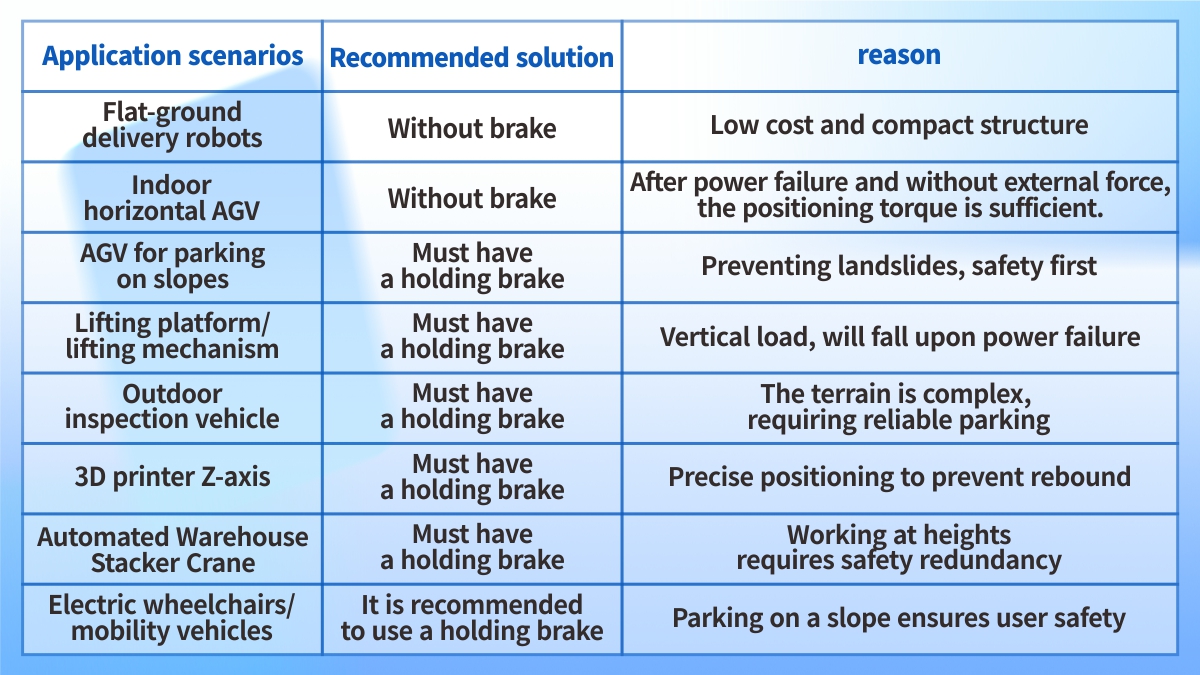
Whether or not to add a brake to a hub motor is not a matter of absolute "good" or "bad," but rather "suitable or unsuitable." For horizontal operation with no slope risk, not adding a brake saves money and space. However, for operations with slopes, vertical lifting, or precise positioning, a brake is an indispensable safety measure. Spending an extra ten minutes understanding the operating conditions during selection is far more worthwhile than trying to fix an accident later. After all, safety is never a cost, but an investment.
Shenzhen Zhongling Technology Co., Ltd.: www.zlingkj.com – is a company specializing in the research and development and application of hub motor technology, committed to providing customers with high-quality solutions!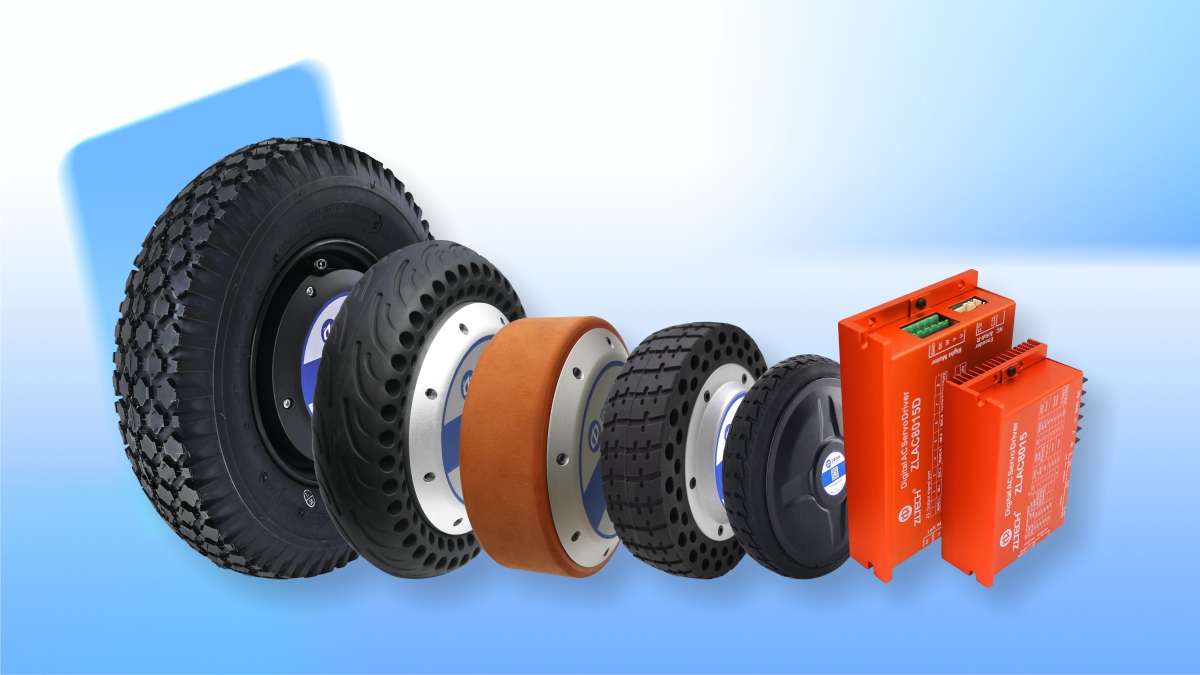
Mailbox:sales@zlingkj.com
Office address:303, 3rd Floor, Building B, Fenghuang Zhigu, Tiezi Road, Xixiang Street, Bao'an District, Shenzhen
Factory address:7th Floor, Building 1, XinLiKang LeChuangLi Smart Industry Park, No. 106 Changdong Road, Changping Town, Dongguan City, Guangdong Province, 523570.