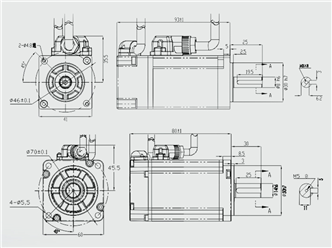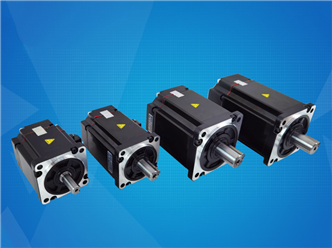

Brushless DC motor (BLDC) is widely used in industries such as industrial automation, automotive, medical equipment, and artificial intelligence due to its advantages of long lifespan, low noise, and high torque. BLDC motor comes in various specifications and types, and selecting the appropriate BLDC motor to meet the performance requirements of the application is essential in practical use. Motor selection is the process by which engineers choose a motor for a given application, involving systematic-level analysis. Engineers repeatedly evaluate available motor options based on the application's objectives and design constraints. Essentially, this process follows an engineering "design spiral" to identify a motor that meets the application's requirements.
When choosing a BLDC motor, parameters are one of the most important selection factors. Among them, the 3 main performance parameters are torque, speed, and power.
1. Torque: Load capacity of the motor
Torque is simply the magnitude of the motor's rotational force, which reflects the motor's load capacity - the greater the torque, the greater the load the motor can withstand, and the motor's performance is relatively better.
But in practical applications, what we need to consider is the maximum torque required for the application, which can be obtained by adding the motor torque, moment of inertia, and friction force. In addition, there are some additional factors that affect the maximum required torque, such as the resistance of the air gap, which requires at least 20% torque margin. In addition to the maximum required torque, the square root torque (RMS) of the motor also needs to be considered. It can be approximated that the square root torque is the sustained output torque required in practical applications. It is determined by many factors: maximum torque, load torque, moment of inertia, acceleration, deceleration, and running time.
2. Speed: What is the fastest speed to reach in revolutions per minute
The speed of the motor is closely related to its application, for example, the speed of the motor will directly determine the flight speed of the drone. Therefore, when choosing a motor, speed is an indispensable consideration.
The motor speed is represented by the KV value, KV - revolutions per volt, RPM/V, which indicates how many times the motor will rotate per volt. The maximum speed (RPM) of the motor can be determined by simply multiplying the KV value by the battery voltage. RPM=KV * V (power supply voltage) According to the formula, theoretically, the speed and voltage of a brushless motor are linearly related. KV value refers to the increase in motor speed for every one volt increase in voltage. If the voltage rises, the motor will indeed accelerate its rotation. The speed of a typical electric bicycle is a few hundred revolutions per minute, while electric vehicles can reach several thousand or even tens of thousands of revolutions per minute. If a very low output speed is required, it is necessary to consider whether to match a gearbox and what type of gearbox to match. In addition, under some application conditions, we also need to consider the range of speed regulation. For example, the speed requirement of a hair dryer is that the maximum speed and average speed are not significantly different, which requires a small range of motor speed; In some point-to-point positioning systems such as conveyor belts and robotic arm systems, motors with a large speed range are required.
3. Power: What is the maximum required wattage
The motor power should be selected according to the power required by the production machinery, and the motor should be operated at rated load as much as possible. When choosing, attention should be paid to the following two points: if the motor power is selected too low, the phenomenon of "small horse pulling big car" will occur, causing the motor to overload for a long time, resulting in motor heating, vibration, speed drop, abnormal sound, etc. In severe load situations, the motor may even be burned out; If the motor power is selected too high, the phenomenon of "big horse pulling small car" will occur, and its output mechanical power cannot be fully utilized. The power factor and efficiency are not high, which is not only detrimental to users and the power grid, but also causes energy waste.
Therefore, it is very important to choose a motor with reasonable power according to application needs. We can choose the motor reasonably through the calculation formula of the three parameter values of motor power, torque, and speed. Power (W)=RPM * Nm/9.55. For example, how can a user choose a 120W motor? Firstly, the rotational speed can be confirmed, and then the required torque for the load can be determined. If it is confirmed that the speed is 3000RPM and the torque is only 0.3NM, calculate according to the above formula, W=RPM*NM/9.55=90。 Based on this, it is confirmed that the maximum power for the user is 90W, so choosing a 100W motor should suffice. But if the application environment is harsh or the continuous running time is long, then 125W can be chosen, and a slightly larger margin will be safer.
4. In addition to the 3 main parameters mentioned above, according to application requirements, it may also be necessary to consider performance such as motor voltage, current, operating temperature range, waterproof level, and reliability
1) Voltage
The rated voltage of a DC motor represents the most effective voltage during operation. It is necessary to ensure that the applied voltage is appropriate for the rated voltage of the motor. If the applied voltage is too low, the motor will not work, and if the applied voltage is too high, it will cause a short circuit in the winding, resulting in power loss or complete damage to the motor. At present, there are 24V, 36V, 48V, 60V and other options available in the BLDC motor market.
2) Current
Current is the driving force of an electric motor, and excessive current can damage the motor. For DC motors, working current and stall current are important. The working current is the average current expected to be consumed by an electric motor at typical torque. The stall current will apply sufficient torque to operate the motor at stall or 0 RPM speed.
3) Working temperature Range
Generally speaking, the working temperature range of brushless motors is between -20 and 100 degrees, and more strictly between -40 and 140 degrees.
4. Waterproof level
The protection level of a brushless motor is represented by IP and a number. The larger the number, the higher the waterproof level.
5) Reliability
Trustworthiness in the field of motors means reliability, robustness, and durability. Your motor controller will not be damaged in the event of a malfunction and can operate normally again when the fault is resolved.
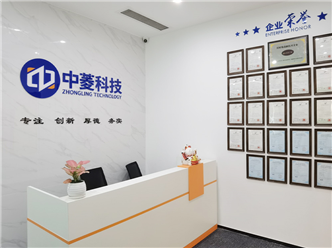
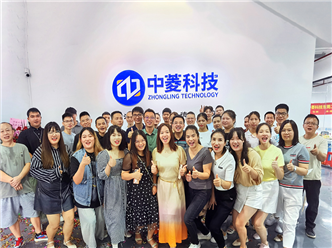
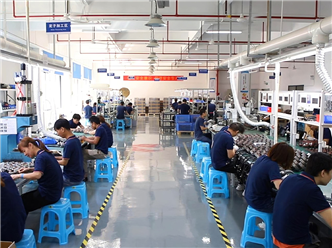
Since its establishment, Shenzhen Zhongling Technology Co., Ltd. has been focusing on the research of DC brushless motors and has obtained multiple patents, with rich experience. The DC brushless motors produced by the company are exported both domestically and internationally, becoming the best choice for many robot companies and automation equipment manufacturing companies. For more company and product information, please visit the company's official website: www.robotmotor.com.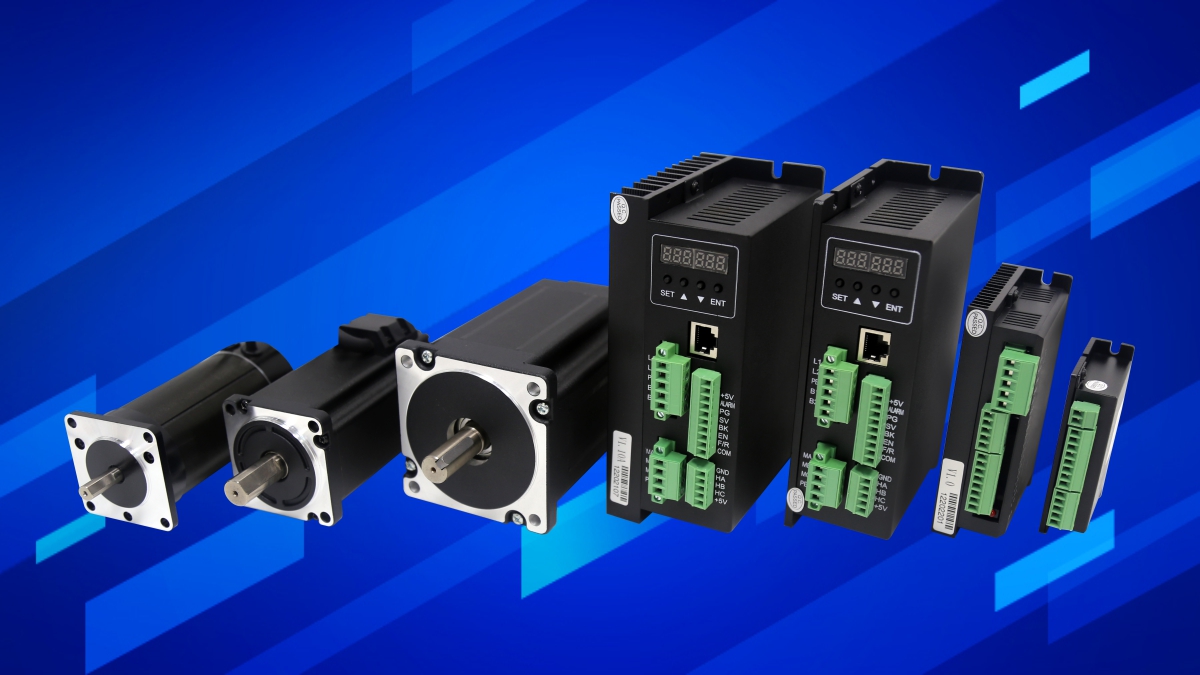
Mailbox:sales@zlingkj.com
Office address:303, 3rd Floor, Building B, Fenghuang Zhigu, Tiezi Road, Xixiang Street, Bao'an District, Shenzhen
Factory address:7th Floor, Building 1, XinLiKang LeChuangLi Smart Industry Park, No. 106 Changdong Road, Changping Town, Dongguan City, Guangdong Province, 523570.