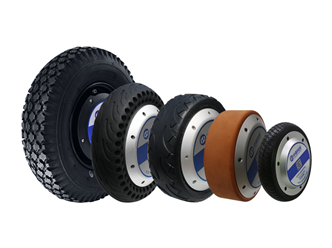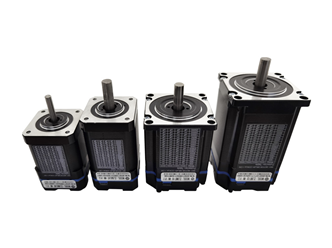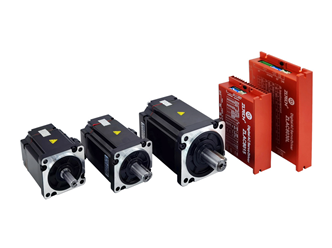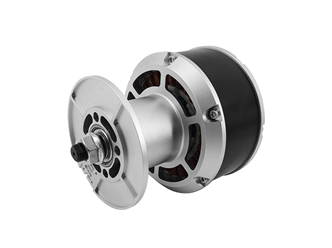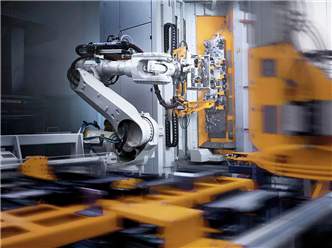

From precise monitoring in power substations to explosion-proof patrols in chemical industrial parks, from round-the-clock duty in tunnel corridors to growth inspections in agricultural parks, inspection robots are comprehensively replacing manual intervention in high-risk, high-frequency, and high-intensity work scenarios. As the "power heart" of robots, in-wheel motors, with their direct-drive, integrated, and precise technical characteristics, have completely broken the shackles of traditional drive modes, endowing inspection robots with more stable, agile, and durable core performance, and reshaping the industrial boundaries of intelligent inspection across all scenarios.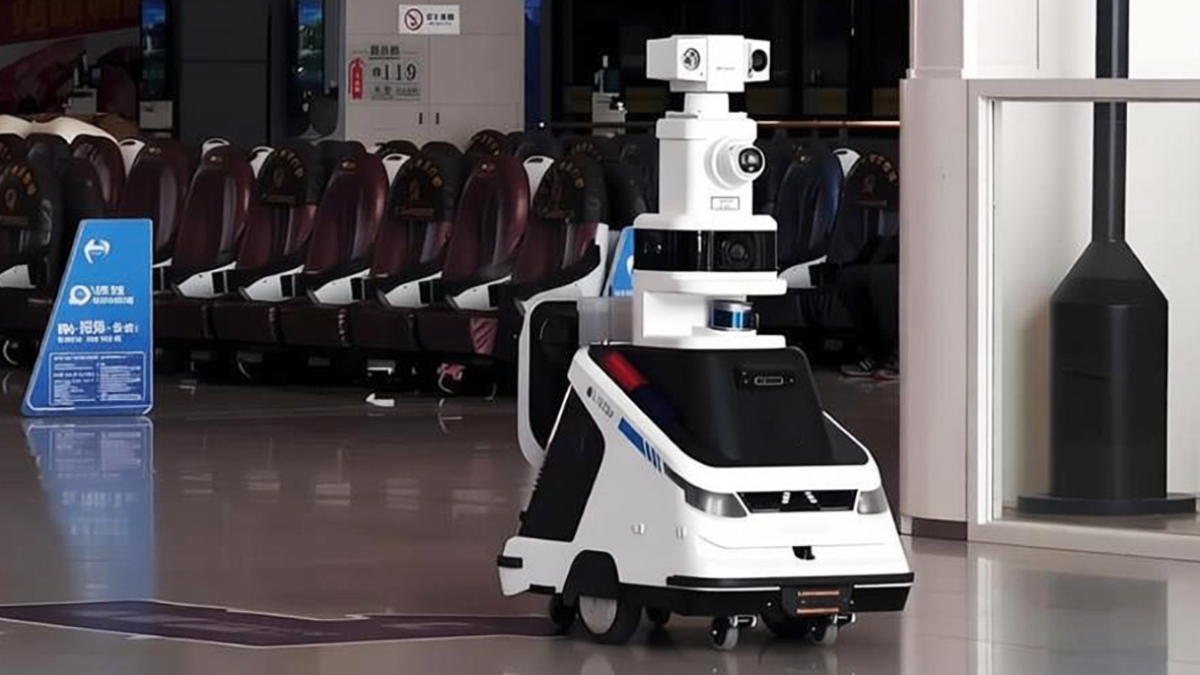
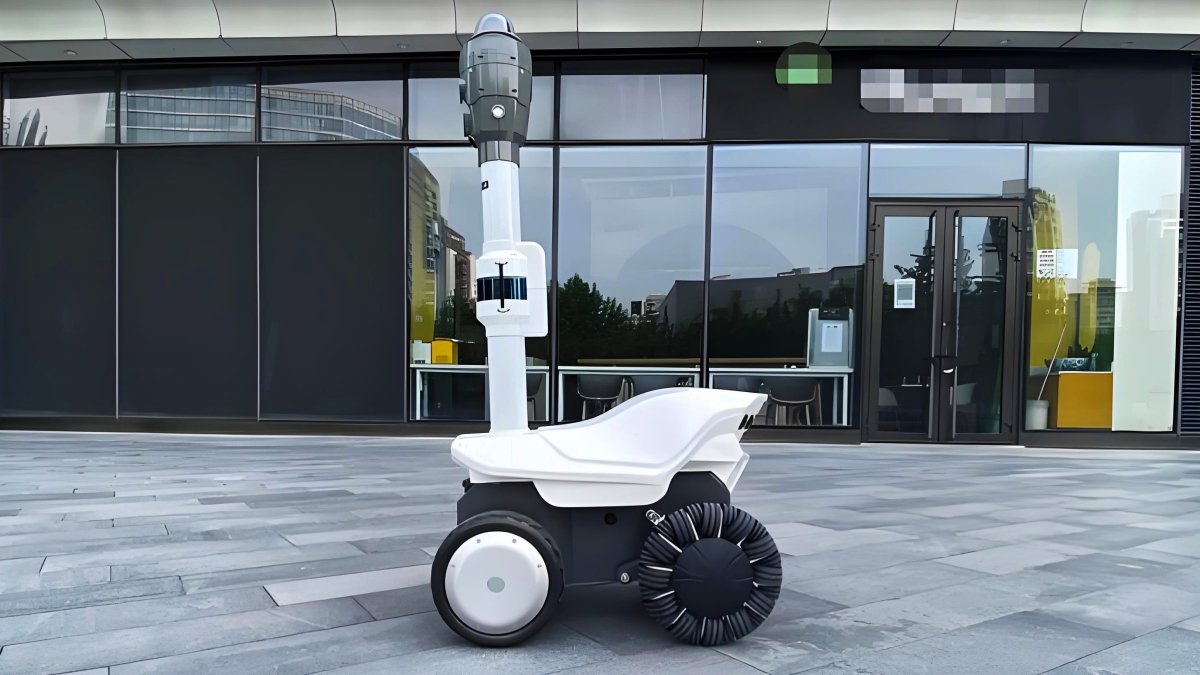
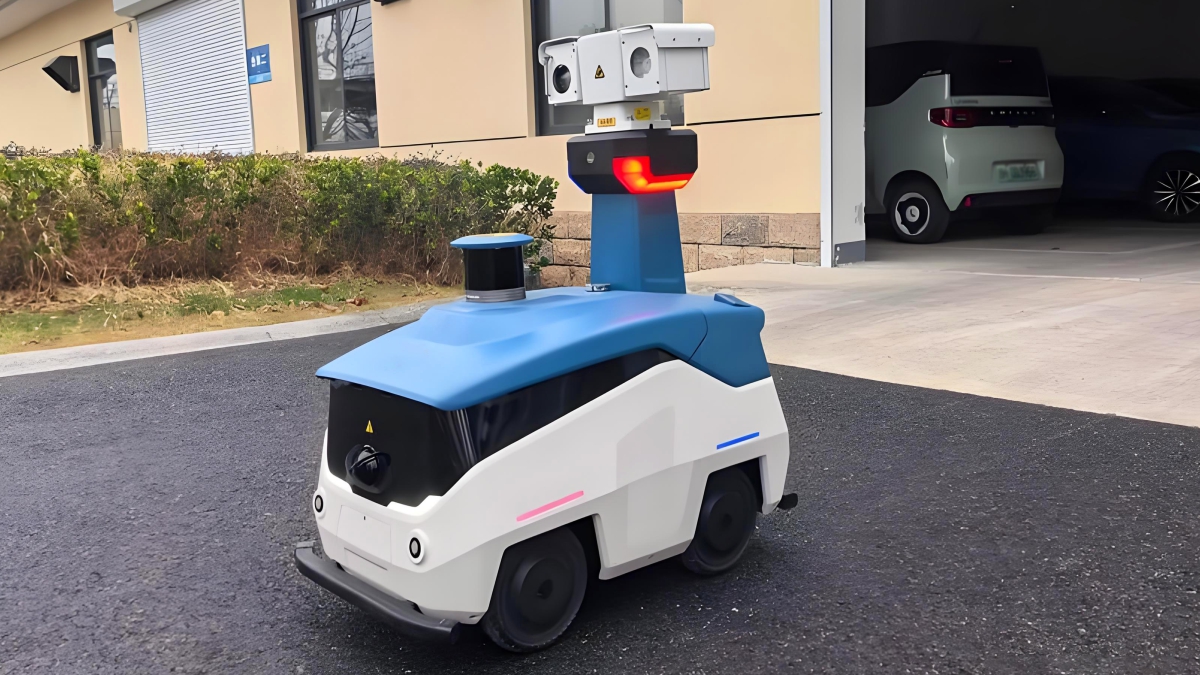
1.Pain point breakthrough: the constraints of traditional driving modes and the innovative logic of wheel hub motors.
For a long time, traditional inspection robots have mostly adopted a composite drive architecture of "motor+reducer+transmission shaft". This mechanical series design has exposed many pain points that are difficult to avoid in practical applications, becoming the core bottleneck restricting the large-scale implementation of inspection robots.
1.1 The four core pain points of traditional driving mode.
1.1.1 Structural redundancy and high maintenance costs: There are dozens of mechanical transmission components, complex assembly processes, and worn-out parts such as gears and bearings need to be replaced regularly. Under long-term uninterrupted operation, equipment is prone to jamming and loosening, and daily maintenance requires dismantling multiple links, resulting in long downtime and difficulty in meeting the 24-hour continuous inspection requirements.
1.1.2 Rigid movement and weak scene adaptability: The differential steering mode with a fixed turning radius makes it difficult for the robot to flexibly shuttle through narrow gaps with dense equipment. When facing unstructured terrain such as gravel roads, speed bumps, and small slopes, it is easy to slip and stall, with poor passability and inability to cover complex outdoor scenes.
1.1.3 Delayed response and insufficient accuracy: Multi link transmission causes delays and losses in power transmission, resulting in slow response to robot start stop and speed regulation, and significant positioning errors. In precision inspection scenarios, it is difficult to accurately dock at abnormal points, resulting in deviations in key data collection such as equipment temperature rise and instrument readings.
1.2 Innovative breakthrough advantages of wheel hub motors
The core innovation of wheel hub motors lies in highly integrating the motor, reducer, encoder, and braking system inside the wheel hub, achieving "zero distance direct drive" for power transmission, fundamentally solving traditional pain points, and possessing four core competencies:
1.2.1 Ultimate integration and simplified chassis architecture: The integrated design eliminates more than 80% of transmission components, simplifies the robot chassis structure by more than 50%, and makes it more compact and lightweight. At the same time, it significantly improves space utilization and facilitates the installation of various types of detection equipment such as infrared thermal imagers, gas sensors, and high-definition cameras, enhancing the diversity of inspection functions.
1.2.2 Independent and controllable, breaking through the boundaries of motion: In the four-wheel independent drive mode, each wheel can accurately control the speed and torque, supporting multiple modes such as stationary steering, diagonal movement, differential steering, etc. The turning radius can be compressed to 0. Whether it is narrow equipment passages or complex outdoor terrain, robots can flexibly pass through and adapt to the needs of all scene operations.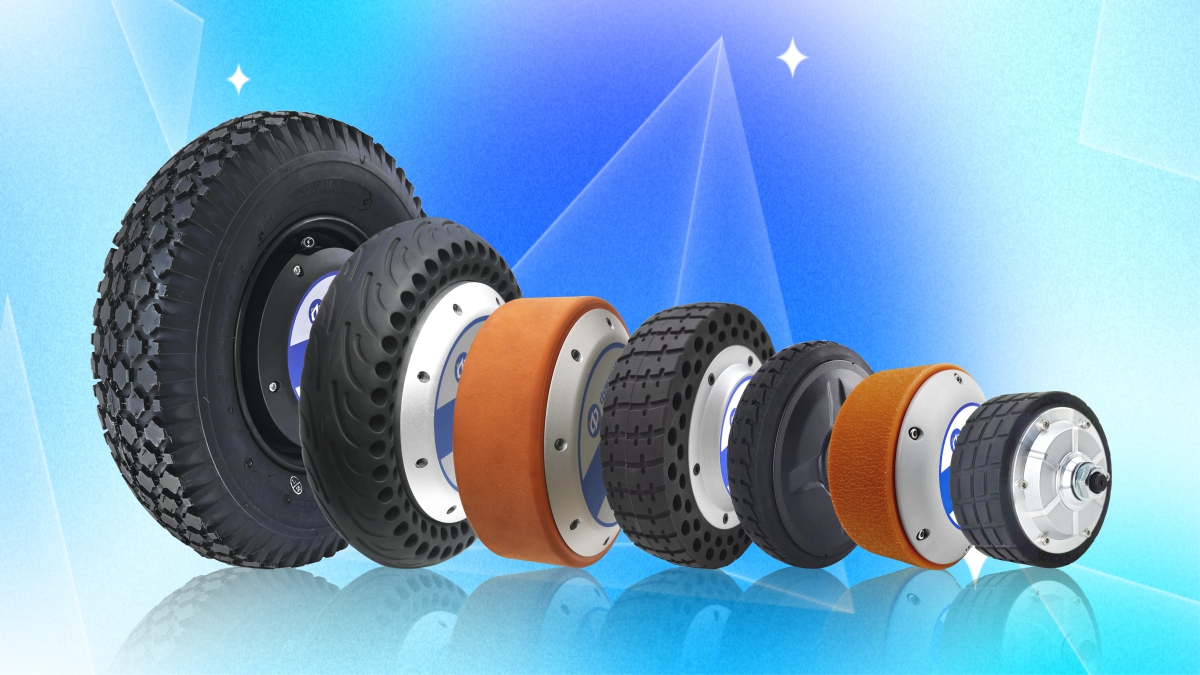
2. Scenario Empowerment: Multi domain Implementation of Wheel Hub Motor Driven Inspection Robots.
2.1 Power industry: the core support for precision inspection of substations.
Substation equipment is dense, electromagnetic interference is complex, and manual inspection poses a risk of electric shock, making it difficult to operate continuously for 24 hours. The inspection robot equipped with a lightweight wheel hub motor (such as 6.5-inch specification, rated torque ≈ 1.2N · m) has become an ideal equipment for substation inspection due to its low noise, high precision, and high adaptability.
2.2 Chemical industry: Safety patrol guarantee for explosion-proof parks.
The chemical industrial park is prone to flammable and explosive gases, as well as corrosive environments. Traditional robot transmission components are prone to sparks, posing safety hazards and making it difficult to adapt to complex terrains. Explosion proof customized wheel hub motor (meeting IIB T4 explosion-proof standard and IP67 high protection), with integrated sealing design to prevent spark generation, has become the core configuration for explosion-proof inspection in chemical parks.
2.3 Agricultural/cultural tourism parks: flexible solutions for multi scenario inspections.
Agricultural parks and cultural tourism parks have complex terrain (grasslands, dirt roads, small slopes), and manual inspections are time-consuming and labor-intensive, making it difficult to fully cover them.
3. Landing Guide: Precise Adaptation and Deployment of Wheel Hub Motors and Inspection Robots.
The performance of wheel hub motors needs to be deeply adapted to the scene requirements and architecture design of inspection robots. The following are the core points of selection and deployment to help achieve efficient implementation.
3.1 Four elements of core selection, matching scenario requirements.
3.1.1 Load and terrain matching: Select the torque specification based on the total weight of the robot (including sensors and batteries), and choose the 6.5-inch model (with a load capacity of 30-80kg) for indoor light inspection.
3.1.2 Protection level adaptation: Choose IP65 or above protection for indoor electromagnetic interference scenarios; Choose IP67 or above protection for outdoor, chemical and other harsh environments; The explosion-proof scenario must select a customized wheel hub motor with the corresponding explosion-proof level (such as IIB T4).
3.1.3 Control interface compatibility: Priority should be given to products that support mainstream control interfaces such as PWM, CAN, RS485, etc., to ensure seamless integration with robot navigation systems and main control boards, reduce debugging difficulty, and shorten deployment cycles.
3.2 Three step deployment and debugging method to ensure stable operation.
3.2.1 Simplified mechanical installation: Directly install the wheel hub motor in the reserved position on the chassis, without the need to build complex transmission brackets, increasing installation efficiency by 70%; Ensure that the axis is level during installation to avoid uneven wear during operation and extend the lifespan of the equipment.
3.2.2 Precise parameter debugging: Set the upper limit of speed and torque according to the scene to avoid overload; Configure FOC driving parameters to reduce power pulsation and improve operational stability; Debug the zero point of the encoder to ensure that the positioning accuracy meets the standard and meets the requirements of precise inspection.
3.2.3 Multi scenario linkage testing: testing the synergy between navigation and motors, verifying the functions of turning in place, obstacle avoidance, and precise parking; Test endurance and regenerative braking effect, optimize energy consumption strategy.
4. Future prospects: Iterative upgrade direction of wheel hub motor-driven inspection robots.
4.1 Three major trends of technological upgrading.
4.1.1 Intelligent deep integration: The wheel hub motor is deeply combined with AI algorithms to optimize multi motor collaborative control through machine learning, achieving terrain adaptation (automatically adjusting torque to adapt to terrain such as grasslands and slopes) and dynamic energy consumption management, further improving inspection efficiency and endurance, and reducing energy consumption losses.
4.1.2 Lightweight and high adaptability: Optimize the selection of magnetic steel materials, design and manufacturing process of pole slot ratio, improve torque output while reducing motor weight, reduce noise by more than 40%, adapt to smaller and lighter inspection robots, and expand inspection applications in narrow spaces and precision scenarios.
4.1.3 Customization of specialized scenarios: For extreme scenarios such as high temperature, high pressure, strong corrosion, and deep sea, develop wheel hub motors that are resistant to high temperature, high pressure, and corrosion, opening up new application areas such as deep sea exploration, mining exploration, and nuclear facility inspection, and promoting the extension of inspection robots to cover all scenarios and terrains.
As the "direct drive heart" of inspection robots, wheel hub motors are driving industry change through technological innovation, bringing "unmanned, precise, and all-weather" inspection from concept to reality. In the future, with the continuous iteration of technology and the continuous expansion of scenarios, wheel hub motors will deeply empower more industries, providing more efficient, safe, and intelligent solutions for infrastructure safety and operation efficiency improvement, accelerating the large-scale implementation and high-quality development of the intelligent inspection industry.
Mailbox:sales@zlingkj.com
Office address:303, 3rd Floor, Building B, Fenghuang Zhigu, Tiezi Road, Xixiang Street, Bao'an District, Shenzhen
Factory address:7th Floor, Building 1, XinLiKang LeChuangLi Smart Industry Park, No. 106 Changdong Road, Changping Town, Dongguan City, Guangdong Province, 523570.